Why Lineage Matters in Plant Medicine: 5 Lessons from 25 Years
By Dr. Courtni "StarHeart" Hale, Ph.D. — Founder, Plant Medicine University
When people ask me where I learned to work with the plants, I tell them the truth: I didn't learn from YouTube, or a weekend retreat, or a clinical training. I learned through lineage.
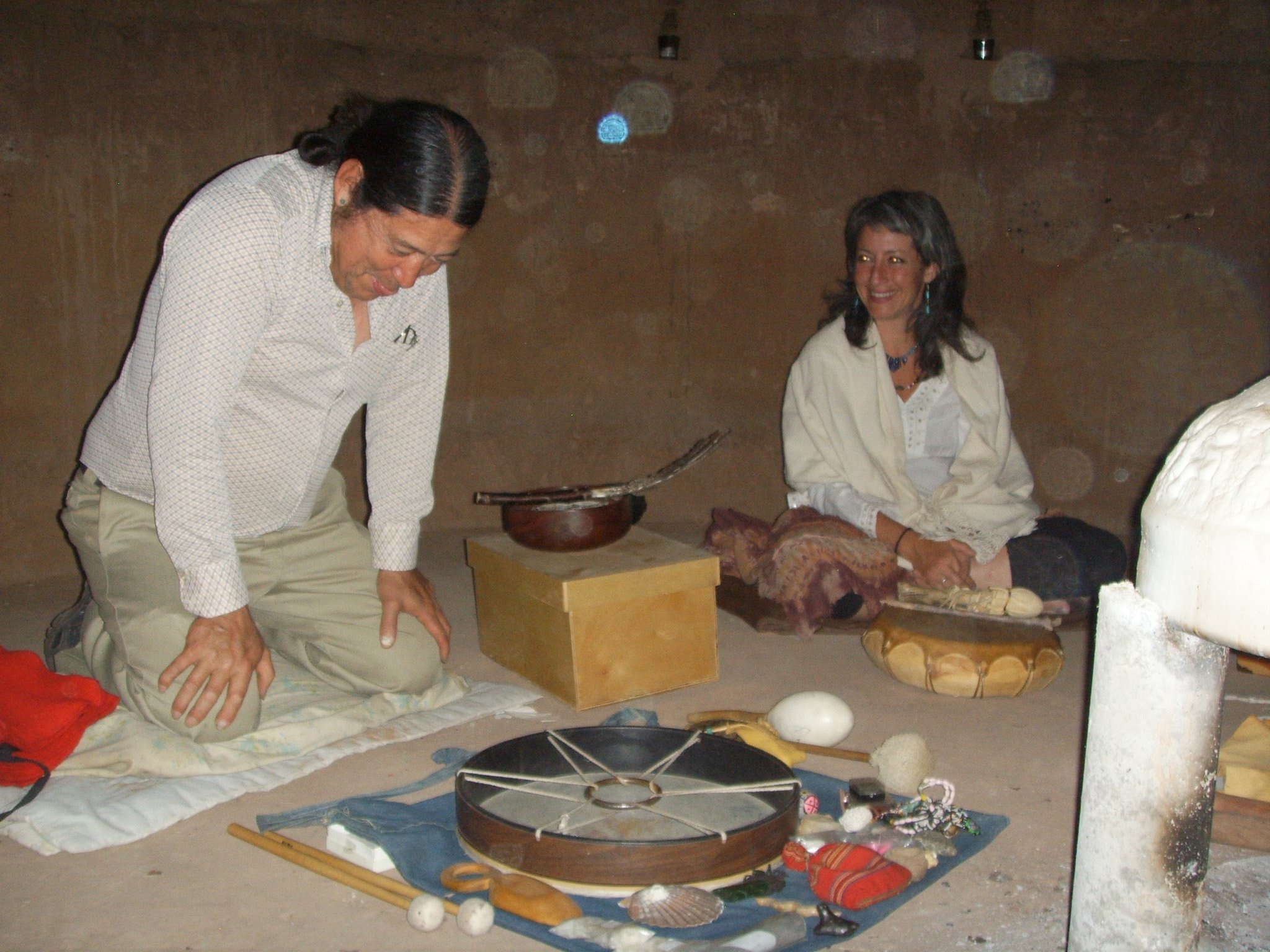
In 2004, after a serious illness Western medicine couldn't touch, I was guided by a vision to New Mexico — where I met Tata Patricio Dominguez, the last medicine man of the Tiwa Pueblo of Las Cruces. I carried his bags, tended his fire, and studied under him for seven years. Together, we participated in the Eagle–Condor Gathering, joining elders and medicine people from the Americas, Africa, Tibet, and Europe.
That apprenticeship shaped my entire understanding of plant medicine — not as a trend, but as a living system that evolves through relationships, responsibility, and respect.
Today, after 25 years of ceremony and integration work, I've seen what happens when that lineage is missing. People can have beautiful visions — but without the foundation, they can also get lost, destabilized, or even spiritually injured.
Lesson 1
Lineage Is the Original Form of Safety
In the traditional world, the person pouring medicine wasn't just a facilitator—they were a caretaker of the entire community's spirit. Their role was not self-appointed but earned through apprenticeship.
Lineage isn't about hierarchy; it's about transmission of knowledge that protects people. It carries oral maps of the spirit world—where to go, what to call upon, what to avoid, and how to return safely.
Without this map, modern facilitators often borrow tools without understanding their energetic structure. The result can be confusion, anxiety, or trauma after ceremony. With lineage, every song, breath, and movement is part of a time-tested pattern that aligns the group with nature's intelligence.
Lesson 2
The Real Medicine Is Relationship
In the lineage I was trained in, medicine is not the plant—it's the relationship.
When we speak of "taking medicine," we mean entering into dialogue with a living consciousness. The ceremony, the prayers, the songs, and the preparation create the conditions for that dialogue. The plant becomes a teacher, not a substance.
Modern seekers often skip this relationship-building step and jump straight into the cup. But if you don't know how to listen, even the most powerful medicine can't teach you much.
The Four Keys System I later developed—Vision, Vehicle, Void, and Vortex—grew directly from this teaching. It helps people reconnect to that relationship safely, through breath, coherence, and ceremony-inspired practices.
Lesson 3
Oral Tradition Carries Energetic Formulas You Can't Read in Books
Our ancestors didn't write manuals—they encoded knowledge in ceremony, song, and story. Each song carries vibration, rhythm, and geometry that calibrate the body's nervous system and electromagnetic field.
When Patricio said, "There is no modern medicine—only the continuation of the evolution of our traditional ways," he meant that these formulas are alive. They adapt, but they must be passed through direct experience—from one consciousness to another.
You can't reverse-engineer that from the outside. It's not intellectual knowledge; it's energetic imprinting. When someone trained in a true lineage sings or prays, their frequency carries the accumulated strength of everyone who held that pattern before them.
Lesson 4
Lineage Teaches Balance Between Power and Humility
True training teaches you what not to do as much as what to do. In my lineage, we were taught that humility is protection. The moment you start believing you are "the healer," you lose the power that flows through you.
Plant medicine isn't about control—it's about cooperation. The facilitator's role is to hold the container, not to dominate the experience. That's why traditional medicine people fast, pray, and prepare for days before a ceremony—they're clearing themselves so the work can flow cleanly through them.
When people approach this work with ego, it becomes dangerous. When they approach it with humility, it becomes sacred.
Lesson 5
Lineage Is How Medicine Evolves Responsibly
Some people believe lineage means "doing things the old way." That's not true. As my teacher often said, "Tradition is a river, not a museum."
The goal isn't to freeze time—it's to keep wisdom alive while allowing it to evolve. That's why I created Plant Medicine University—to carry forward these teachings into a form modern people can understand and apply without losing their integrity.
Through programs on Preparation, Integration, and The Four Keys Toolkit, we translate ancient ceremonial science into modern language: neurofeedback, heart–brain coherence, and micro-habit systems that align the body, mind, and soul.
This is lineage in action—evolving, not erasing.
Final Thoughts: You Can't Google a Ceremony
In a world where anyone can claim to be a healer, lineage is the difference between information and transformation.
It's what ensures that sacred knowledge remains alive, not exploited. It's what connects us to the Great Spirit, the Earth, and to each other.
When people ask me why I teach preparation before ceremony, I tell them this: "Because medicine doesn't begin when you drink — it begins when you remember."
And remembering begins with lineage.
About the Author
Dr. Courtni "StarHeart" Hale, Ph.D.
Founder of Plant Medicine University. Seven-year apprentice under Tata Patricio Dominguez, last medicine man of the Tiwa Pueblo of Las Cruces. Kambo practitioner, ayahuasca facilitator, and Compass Keys guide serving veterans, executives, and athletes in the Rehoboth Beach, Delaware area.
Read her full story →