Professional Education
Train to Hold Space for the Most Consequential Moments in a Person's Life.
Professional Facilitator Education for the Next Era of Psychedelic Care
Plant Medicine University prepares practitioners to support people before, during, and after transformative and non-ordinary states of consciousness — with rigor, ethics, and deep respect for traditional knowledge.
A New Field Requires a New Standard of Training.
Psychedelic-assisted therapy, plant medicine ceremony, and non-ordinary states of consciousness are moving from the margins of culture into clinical trials, state regulatory frameworks, and mainstream conversation.
The practitioners who will shape this field are being trained right now. The question is whether they are being trained well.
Plant Medicine University was built to answer that question with a clear standard: facilitators need more than information about substances. They need a framework, practical tools, ethical grounding, and the lived understanding of what it means to hold space for another human being in a non-ordinary state.
The Regulatory Landscape Is Moving.
Facilitators who are not prepared today will not be ready when the law catches up.
Oregon has established a regulated psilocybin services framework. Colorado has passed the Natural Medicine Health Act. Additional states are actively developing legislation. Federal Right to Try discussions are ongoing.
Each jurisdiction creates its own requirements for facilitator training, supervised hours, ethics education, and professional conduct. PMU tracks these developments and builds training that prepares practitioners for the emerging regulatory environment — not just the current one.
Regulatory Alignment
Built for Multiple Rules and Systems in Anticipation of Federal Rules
Legislation governing plant medicine facilitation is pending in many states, and federal regulatory frameworks are actively taking shape. PMU was not built to chase a single state's ruleset — it was built to move with the landscape. We will continue adding to the curriculum and shifting it to meet rules and requirements as they are issued.
We are the first and only hybrid earth-honoring and Indigenous-based facilitator training program of this kind. We have been training initiates within our church for many decades — this work is not new to us. What is new is our commitment to working directly with government legislative bodies to help formulate rules that make this manageable and safe on all sides: participants, practitioners, trainers, and legislators alike.
We have always taken the responsibility of this work seriously. Our curriculum is designed to meet the core competency requirements appearing across multiple regulated state frameworks — including New Mexico's proposed 7.35.3 NMAC — and is structured to adapt as federal guidance emerges.
Multi-State Curriculum Design
Core competencies drawn from emerging frameworks across New Mexico, Oregon, Colorado, and anticipated federal guidelines — not locked to a single jurisdiction.
Supervised Practicum
Hands-on facilitation experience under direct supervision, meeting the practicum hours required across state certification pathways as they are finalized.
Hybrid Online + In-Person
A blended delivery model combining live online instruction with required in-person training in Albuquerque, NM — consistent with hybrid education frameworks across multiple states.
Indigenous Lineage Instruction
Tata Patricio Domínguez, a recognized Indigenous elder and NM Cultural Liaison, provides lineage-based instruction that multiple proposed rules acknowledge as a qualifying educational component.
Reference
"The objective of this rule is to adopt rules governing the enrollment of qualified patients and the certification of certifying clinicians, practitioners, facilitators, educational programs, and approved locations..."
New Mexico Department of Health, 7.35.3 NMAC RulemakingWhat Facilitators Actually Need to Know
Nervous System Literacy
Understanding how the autonomic nervous system responds to non-ordinary states, stress, trauma, and transformation — and how to support regulation before, during, and after an experience.
Preparation Protocols
Structured approaches to intention-setting, expectation management, contraindication screening, environment design, and the relational foundation that determines how an experience unfolds.
Facilitation Skills
Presence, observation, non-directive support, boundary maintenance, crisis response, and the practical skills required to hold space for someone in a non-ordinary state.
Integration Practice
The often-neglected work of helping people translate insight into lasting change — meaning-making, somatic integration, relational repair, and the long arc of transformation.
Traditional Knowledge
The lineage, ceremony, and indigenous wisdom that gave rise to plant medicine practice — and the ethical responsibility practitioners carry when working in proximity to these traditions.
Ethics & Professional Scope
The boundaries between facilitation and therapy, medicine, and spiritual direction — and the professional responsibility to know the difference and refer accordingly.
State Licensure Pathways
Current and emerging regulatory requirements in Oregon, Colorado, and other jurisdictions — and how PMU training aligns with the competencies these frameworks require.
Psychedelic Harm Reduction
Evidence-based approaches to minimizing risk, recognizing adverse reactions, supporting difficult experiences, and maintaining participant safety across the full care continuum.
The COMPASS Framework
PMU training is organized around the COMPASS Keys — a whole-person framework developed by Dr. Courtni StarHeart Hale across decades of clinical, ceremonial, and traditional practice.
Mind
Cognitive patterns, beliefs, expectations, and the mental preparation required for transformative work.
Body
Somatic awareness, nervous system regulation, physical preparation, and the body's role in non-ordinary states.
Emotion
Emotional readiness, relational patterns, trauma history, and the affective dimensions of transformative experience.
Purpose
Intention, meaning, values, and the deeper motivations that shape how people engage with and integrate transformative experiences.
The Care Continuum
What Practitioners Receive
- The COMPASS Keys system — a whole-person framework for preparation, facilitation, and integration
- COMPASS Client Diagnostic — a structured Jotform tool for use with clients within professional scope
- Facilitator Resource Package — training videos, scripts, preparation materials, integration tools, and nervous-system practices
- Prerecorded sound journey for experiential practice of facilitation principles
- Somatic breathwork and nervous-system regulation practices
- Preparation and integration training covering the full arc of transformative experience
- In-person intensive weekend with structured journey work and facilitator practicum
- Access to the PMU learning community for up to one year
Want to see exactly what is included, how the intensive works, tuition and enrollment options?
Training Schedule & Learning Pathway
Ready to learn how COMPASS becomes a practical facilitator toolkit?
Explore the ProgramThe State Landscape
PMU tracks regulatory developments across the United States and builds training that prepares practitioners for the emerging legal and professional environment.
Oregon
ActiveOregon Measure 109 established a regulated psilocybin services framework. Licensed facilitators must complete state-approved training, supervised hours, and pass a background check. PMU training aligns with Oregon's facilitator competency requirements.
Colorado
ActiveColorado Proposition 122 (Natural Medicine Health Act) created a regulated framework for psilocybin and other natural medicines. Licensed facilitators must meet state training and supervised practice requirements.
New Mexico
DevelopingNew Mexico has active legislative efforts to establish a regulated psilocybin framework. PMU monitors developments and maintains relationships with practitioners working in the state.
New Jersey
DevelopingNew Jersey has introduced legislation to establish a psilocybin services program. PMU is engaged with policy discussions and preparing practitioners for the emerging regulatory environment.
Delaware
DevelopingDelaware has active discussions around plant medicine policy. PMU is headquartered in Delaware and maintains close attention to state-level developments.
Federal / Right to Try
DevelopingFederal Right to Try discussions continue to evolve. PMU prepares practitioners for a landscape in which federal and state frameworks may diverge significantly.
Program Leadership

Founder & Lead Instructor
Dr. Courtni Hale, Ph.D.
- Ph.D. in Transpersonal Psychology; National Merit Scholar
- Creator of the COMPASS Keys framework
- Nearly three decades of ceremonial and clinical practice
- Seven-year apprenticeship with Tata Patricio Domínguez
- Specializes in nervous-system literacy, trauma, and integration
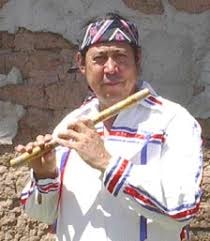
Lineage Keeper | New Mexico Cultural Liaison | Board Member
Tata Patricio Domínguez
- Tiwa/Piro-Manso elder and ceremonial leader, Albuquerque NM
- Director & Minister, Church of the Spiritual Path since 1998
- Institute of Natural and Traditional Knowledge — leadership
- Decades of Indigenous elders councils and Eagle–Condor gatherings
- Lineage Keeper, NM Cultural Liaison & Board Member at PMU
Preparation Is a Professional Responsibility.
The people who will shape the future of psychedelic medicine are being trained right now. Some will be trained well. Some will not.
Plant Medicine University Facilitator Training exists for the ones who want to be trained well — who understand that the quality of their preparation directly determines the quality of care they can offer.
This is not a weekend certification course. The in-person intensive is one component of a deeper professional-development program that combines education, experiential practice, community and continued learning for up to one year.
If you are ready to take that responsibility seriously, we are ready to train you.
Plant Medicine University is a Delaware-based educational company offering online facilitator education and issuing certificates of completion. The certificate does not constitute professional licensure and does not authorize practice in Delaware. Graduates may use the education in jurisdictions where such work is lawful. Completion of this program does not guarantee employment, does not automatically qualify graduates for licensure in any jurisdiction, and does not permit anyone to administer a controlled substance outside applicable law. Plant Medicine University is not approved by the State of Oregon, the State of Colorado, or any other state regulatory body unless such approval is specifically documented and publicly disclosed. This program does not treat, cure, or diagnose any medical or psychiatric condition, including PTSD. Participants are responsible for understanding and complying with all applicable federal, state, and local laws governing the use of plant medicines and psychedelic substances in their jurisdiction. Nothing in this program constitutes legal or medical advice.
Join the Finding the Force community
Writings on plant medicine, consciousness, lineage, and the path of the facilitator — delivered directly from Dr. Courtni Hale on Substack.